
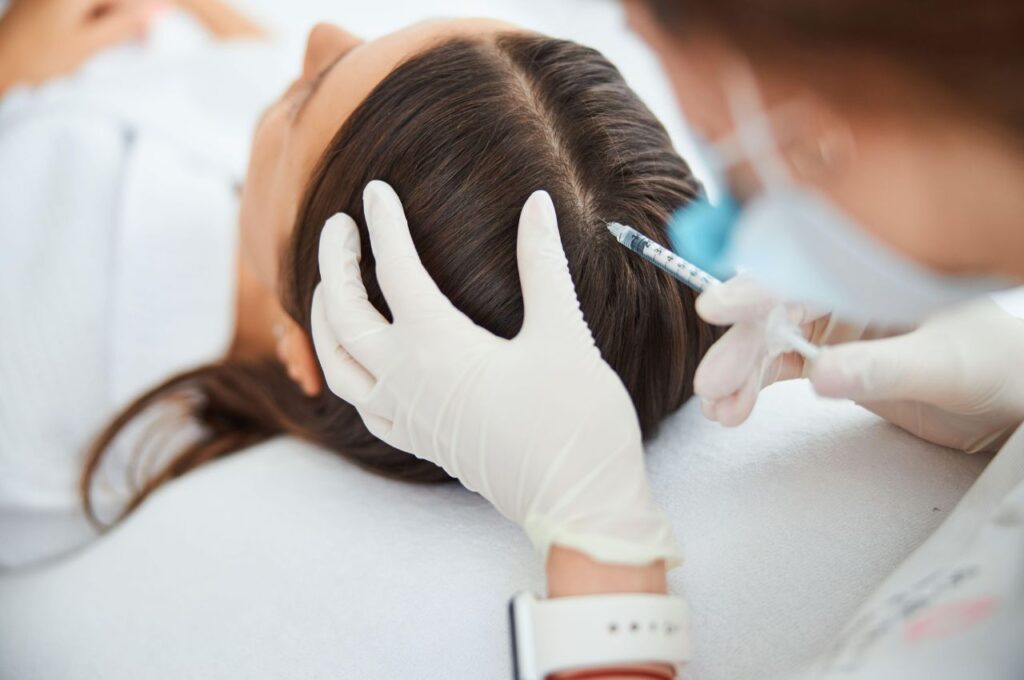
Hair fall usually starts quietly — a few extra strands on your pillow, a slightly wider parting, or a thinner ponytail. And once you begin looking for solutions, one treatment that often comes up is PRP (Platelet-Rich Plasma).
Clinical studies have shown that PRP therapy can significantly improve hair density, with increases of up to 45 hairs per cm² after multiple sessions. This highlights why consistency and multiple sessions are essential for visible results.
But one question almost comes to every patient’s mind, that is:
“How many PRP sessions will I actually need to grow my hair?”
The truth is, PRP is not a one-time treatment. It works gradually by stimulating your hair follicles over time. While most people need multiple sessions for visible results, the exact number depends on your hair condition, age, and overall scalp health.
How Many PRP Sessions Are Typically Required?
For most individuals, doctors recommend 3 to 6 PRP sessions in the beginning.
- Sessions are usually spaced 4 to 6 weeks apart
- This helps your scalp respond consistently to the treatment
- After the initial phase, maintenance sessions are required
In simple terms:
You don’t see results from just one session — PRP works as a series.
Research also shows a direct correlation between the number of PRP sessions and improvement in hair density, meaning patients who complete the full course of 3–6 sessions see significantly better results than those who stop early.
Understanding the PRP Treatment Phases
PRP treatment is usually divided into phases to gradually improve hair growth.
Initial Phase: Follicle Activation (Months Needed 1–3)
This is the most critical stage.
- Frequency: Every 4 weeks
- Sessions: 3–4
- The goal is to stimulate inactive/dormant follicles
At a biological level:
- Growth factors like PDGF (Platelet-Derived Growth Factor) and VEGF (Vascular Endothelial Growth Factor) improve blood supply
- Stem cells in the scalp are activated
- Hair fall begins to reduce
Studies indicate that noticeable reductions in hair shedding can begin within the first few sessions, as growth factors in PRP help improve blood supply and reactivate dormant follicles
Consolidation Phase: Strength & Density Building (Months 3–5)
Once follicles are activated, the focus shifts to strengthening them.
- Sessions: 1–2
- Gap: 4–6 weeks
- Goal: Improve thickness and hair shaft quality
During this stage:
- Hair strands become thicker and stronger
- Weak follicles stabilize
- Early regrowth becomes visible.
Maintenance Phase: Long-Term Preservation
Hair loss is often ongoing (especially genetic hair loss), so maintenance is essential.
- Frequency: Every 4–6 months
- Goal: Prevent relapse and sustain results
Without maintenance:
- Hormonal and genetic factors can restart hair thinning
- Gains from PRP may gradually reduce
Think of this as protecting your investment in hair regrowth
PRP Treatment Timeline – What to Expect
PRP is not an overnight solution. Understanding the timeline prevents unrealistic expectations.
Month 1
- Hair fall starts to reduce
- Scalp condition improves
Month 2–3
- “Baby hair” or early regrowth appears
- Hair feels slightly thicker
Month 4–6
- Noticeable increase in density
- Improved volume and coverage
Month 6–9
- Full visible results
- Hair looks healthier and stronger
A review of clinical trials found that PRP improved hair density and thickness in over 80% of studies.
Factors That Affect the Number of PRP Sessions
Not everyone responds to PRP in the same way. Several factors influence how many sessions you may need:
1. Severity of Hair Loss
- Early-stage thinning – Fewer sessions
- Advanced hair loss – More sessions + combination treatments
2. Age
- Younger individuals often respond faster
- Older patients may require extended treatment
3. Type of Hair Loss
- Androgenetic alopecia (pattern baldness)
- Telogen effluvium (stress-related)
- Alopecia areata
Each type responds differently to PRP.
4. Lifestyle & Nutrition
- Poor diet, stress, and sleep can slow results
- Healthy habits can enhance PRP effectiveness
5. Hormonal Health
Conditions like thyroid imbalance or PCOS can impact outcomes.
Is One PRP Session Enough?
This is one of the most common misconceptions — and the answer is no.
PRP works by gradually improving your scalp environment and stimulating hair follicles over time. A single session may provide a temporary boost, but it’s not enough to create visible or long-lasting results.
A simple way to think about it:
Just like going to the gym once won’t build muscle, one PRP session won’t restore your hair. It’s the consistency over multiple sessions that makes the difference.
Clinical evidence supports this, showing that single-session treatments are not sufficient for sustained hair regrowth, while multiple sessions lead to significantly better outcomes.
Tips to Reduce the Number of PRP Sessions Needed
While you can’t completely skip sessions, you can improve your results by supporting the treatment:
- Follow all aftercare instructions carefully suggested by your dermatologist in Pune.
- Maintain a healthy, balanced diet with enough protein
- Manage stress level, avoid overthinking.
- Avoid excessive heat styling or chemical treatments on your hair.
- Stick to your treatment schedule strictly and follow all the guidelines.
These small habits can make your PRP treatment more effective and help you get better results in the period of time suggested by your hair specialist.
PRP is not a quick-fix treatment for any of the hair problems; it’s a gradual and slow process that works with your body’s natural healing ability to grow your hair.
Most people require the following:
- 3–6 sessions are needed at the beginning of the treatment
- Followed by maintenance sessions to sustain results is required.
With proper follow-up and consistency in the treatment and care, PRP hair treatment can reduce hair fall, improve thickness, and enhance overall hair health.
The most important thing is to have a set of realistic expectations and follow a treatment plan that’s made for your needs by the ahir specialists.
If you’re considering PRP for hair loss, it’s important to understand that results don’t happen overnight. The treatment works best when done consistently and with the right guidance.
The number of sessions you need will depend on your hair condition, but with the right approach, PRP can make a noticeable difference over time.
The best way to get started is with a personalized consultation from the best dermatologist in Pune at CAEFA, where your scalp can be evaluated, and a treatment plan can be created specifically for you based on your needs, your hair condition, and the treatment that will best suit your scalp for hair regrowth.